

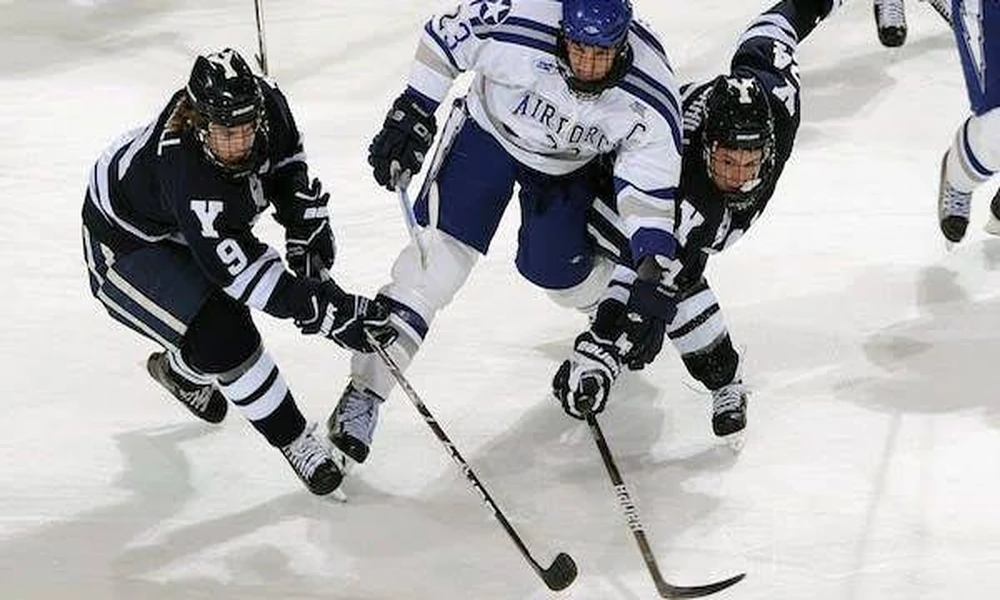
Walk into any neighbourhood rink on a weeknight in winter, and what stands out is not the hockey itself but everything happening around it. Parents crowded near the boards, volunteers arguing over scheduling at a folding table near the entrance, a retired man in a team jacket who has been keeping score for eleven years and knows every family by name. Brent Polischuk has pointed to this kind of repeated, layered contact as the foundation of genuine community, not events or programmes designed around connection, but environments where connection happens as a side effect of showing up consistently. Hockey creates those environments more reliably than almost any other recreational sport. This is not because of what the game is, but because of what running it demands from the people around it.
Hockey runs on participation
- Volunteers for other sports skip
Most recreational sports need a referee and somewhere to play. The game of hockey requires much more than that. Managing equipment, coordinating ice time, communicating across dozens of families, and keeping the operation running week after week during the coldest months is no easy task. A resident’s presence is not deliberate but rather a practical necessity that brings them into constant contact. The familiarity that arises from solving shared problems over the course of months is a different sort of bond than the bond formed from watching a game from the same side of the field.
- Coaches who stay for seasons
Coaches who stay with the same group for two or three seasons occupy a position that most recreational sports do not. Some kids had a difficult year at school, some parents are going through something, and some families have just moved into the neighbourhood. A single registration cycle cannot provide that level of familiarity. It accumulates slowly, season over season, and creates cross-generational relationships within the neighbourhood that persist long after the players have aged out of the programme entirely.
- Roles no other sport creates
Commitment to rink work, sponsorship coordination, and seasonal event planning. These are positions that connect hockey volunteers to local businesses, community figures, and residents who have no direct involvement in the sport at all. A fundraising group organised around a hockey programme routinely pulls in people from well outside the registered participant base. This widens the community network the sport generates into parts of the neighbourhood that recreational sport rarely reaches through other means.
Building beyond the rink
Friendships formed between parents during one hockey season continue through school events and neighbourhood gatherings that have nothing to do with sport. Volunteer networks carry over into unrelated community projects years after the original programme involvement ended. A neighbourhood with a long-running hockey community develops shared history, common references, familiar names, and remembered seasons that give residents something to belong to regardless of when they first arrived.
Other sports generate goodwill. Hockey, across enough seasons in the same neighbourhood, builds something that functions less like a programme and more like a permanent layer of community life that does not disappear when the ice melts.